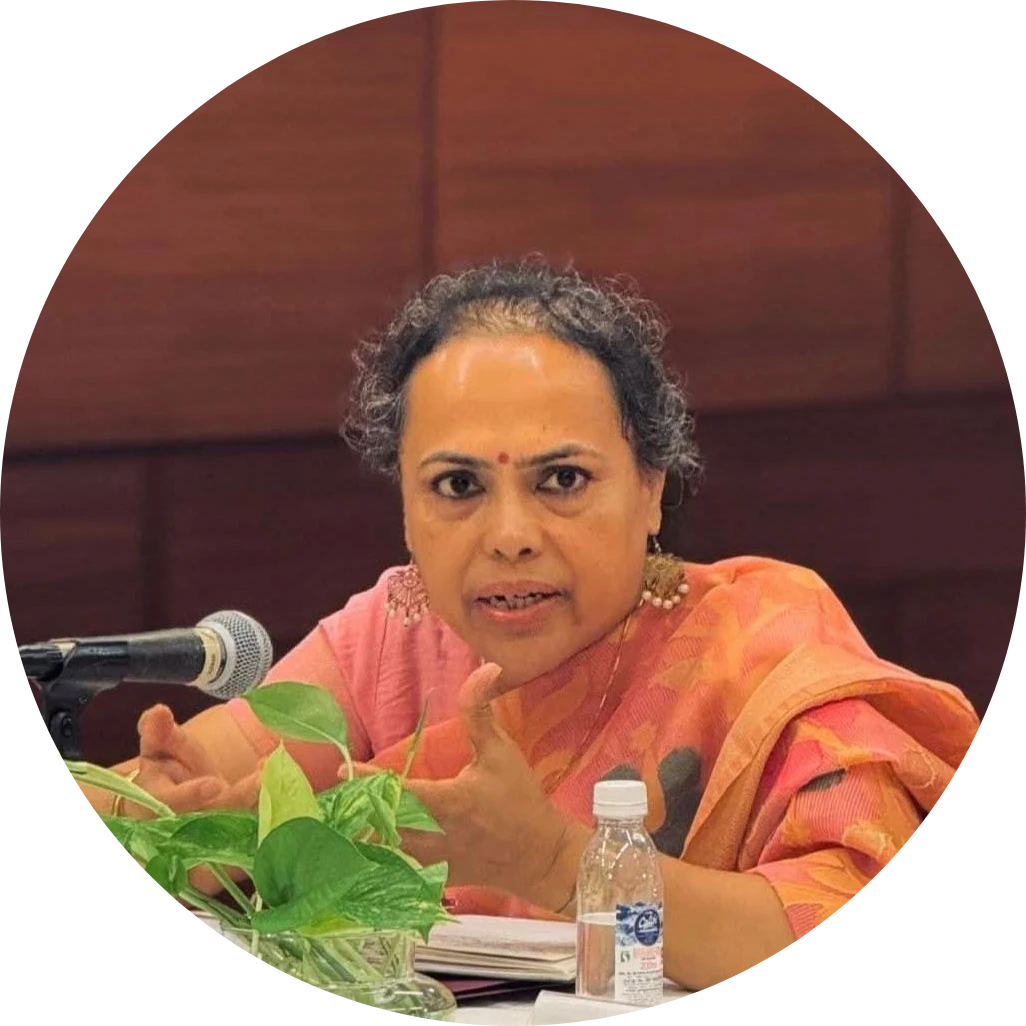
Action India, the organization I represent, is soon entering its fiftieth year. For decades, we have worked with women, but never with women in isolation. We have always looked at women within the family. While the feminist movement is right to describe the family where women face a lot of exploitation, we also cannot disconnect ourselves from it. If change must come, it has to come from within families.
Baby Steps Toward Equality
Change is slow. Sometimes it takes a generation. Yet even small steps matter. One of our flagship initiatives is the Mahila Panchayat Program, started over thirty years ago in Delhi’s Resettlement communities. Local women are trained as paralegals to resolve cases of violence and injustice within the community itself, reducing dependence on police and courts. This model was later adopted and scaled by the Delhi government.
But alongside this, we realized we had to work with youth. While the current generation needs immediate support when violence occurs, the next generation must be prepared not to tolerate violence at all. That is why we launched Aao Baat Kare, Milkar Saath Chalein (Come, Let Us Talk and Walk Together)—a program to spark conversations within families. Conversations about daily life, aspirations, and support needs. Conversations that are rare today, even when families sit together.
We started with something simple, that is, the household chores. Boys began helping in small ways—fetching water, chopping onions. Girls began expecting and negotiating for that support. These are baby steps, but they break old habits.
Negotiating Education and Opportunities
Education is another arena where negotiation is essential. Often, girls are more sincere about studies, but parents invest in their sons. Some times, brothers themselves see this injustice and argue with parents to let their sisters study or receive tuition. They offer to pick up their sisters from the school or the tuition centres. Yes, this is still patriarchal—brothers “protecting” sisters—but it is a step forward, and each step matters.
Breaking the Silence on Reproductive and Sexual Health
For over thirty years, we worked on menstrual and reproductive health with women and girls. Recently, we began engaging with boys as well. When boys learn about menstruation and women’s body changes, they begin to show sensitivity; offering to help when the sisters or mothers are having periods, performing household chores, even fetching a hot-water bag for their sister or mother.
We also provide sexuality education. Once shy and silent, boys now openly ask as to how they can be responsible partners, or how to understand consent in relationships. This is new, and very encouraging. The culture of silence is breaking.
If consent is respected in intimate relationships, it lays the foundation for equality in marriage and partnerships.
Consent, in particular, is critical. We stress that rejection is part of life—not an excuse for violence or abuse. If consent is respected in intimate relationships, it lays the foundation for equality in marriage and partnerships.
Shifting Relationships Within Families
We also explore complex dynamics like those between mothers-in-law and daughters-in-law. Power shifts within these relationships, but the real culprit is patriarchy, not the women themselves. Programs like Saas Bahu Samvad (Mother-in-law/Daughter-in-law Conversations) help families see this, reducing conflict and increasing the value placed on daughters and daughters-in-law. Through another initiative, Mubarak Ho Ladki Hui Hai (Congratulations, It’s a Girl!), we celebrate the birth of daughters with sweets and music. This simple act changes how families value girl children. Some even begin encouraging daughters-in-law to study or work after marriage. The Delhi government has adopted and scaled this initiative as well.
Violence-Free Families and Building Intimacy
Our “violence-free families” program not only resolves cases of domestic violence but also tracks families for a year afterwards to ensure cycles of violence don’t return. We also create spaces for intimacy between husbands and wives—something often absent in families burdened by responsibilities. Simple acts like exchanging a rose or going out together may seem trivial to us, but for many couples they are revolutionary. These moments of intimacy open the door to dialogue, understanding, and greater equality.
Facing Realities of Patriarchy
We must be honest: patriarchy is deeply entrenched. Older generations, especially men, often resist change because they fear losing power. Sometimes crises—like lack of toilets or severe family conflicts—force shifts. But otherwise, change is slow. Women often understand the harm of patriarchy but cannot act; instead, they make space for the next generation.
Patriarchy is not uniform. Its expressions vary across communities, castes, and contexts. In some families, women are pressured to produce a male child at any cost—even forced into degrading arrangements. In others, discrimination is visible at the dining table: elders eat first, women and girls last. We work with families to encourage women to keep aside food for themselves as an act of self-care. Because if women do not nourish themselves, how will they care for others?
Toward a Culture of Dialogue
At the heart of all our work—whether with domestic workers, men, or youth—is dialogue. Dialogue between women and employers. Between husbands and wives. Between generations. Between men and women. Only through dialogue can families start to share feelings, value each other, and break stereotypes.
The road is long. Patriarchy is stubborn. But with each conversation, each negotiation, each baby step, we see families becoming more equal and more humane. And that is how change will endure.